When Curiosity Becomes a Risk: Drugs, Peer Pressure, and the Dangers Few Teenagers Talk About
An article about how peer pressure and curiosity can lead teenagers to drugs and risky decisions that affect their future.
In every high school, there are stories that don’t appear in textbooks. Stories about friendships, the pressure to be accepted, curiosity, and decisions that seem small in the moment but can change years of a person's life. Often, these stories begin in surprisingly simple ways: a party, a joke between friends, or a challenge that seems harmless.
The Moment It All Can Begin
Alex was 16 when he first found himself in a situation that, for many teenagers, arises sooner or later. He was at a party in an apartment too small for the number of people there. Music vibrated through the walls, someone was trying to connect a phone to the speaker, and a few classmates had gathered on the sofa, filming snippets for Instagram and TikTok. The atmosphere was that exact kind of cheerful chaos you recognize immediately: laughter, quick jokes, glasses passing from hand to hand.
At one point, someone pulled a pill out of their pocket and held it up as if it were a joke or a party accessory. There was no dramatic speech. No explanation. Just a nonchalant line: "It’s no big deal." "Everyone tries it at least once."
Around Alex, there seemed to be no alarm bells. No one seemed scared. No one talked about risks, effects, or what might happen next. On the contrary, the atmosphere was relaxed, almost banal. This is exactly what makes these situations so deceptive: nothing feels dangerous in the moment.
Alex didn't know exactly what the pill was. He didn't know how it worked or its effects. But in such moments, the problem isn't a lack of information. The problem is the subtle pressure from those around you. Not direct, aggressive pressure like in the movies, but that feeling that if you say "no," you risk appearing too serious, too "good," or simply "out of the group."
For many teenagers, this is the point where the real tension arises. Not between "good" and "evil," but between two very human things: the desire to belong and the instinct that says something isn't right. Alex felt that brief moment of hesitation. It wasn't a heroic or calculated decision. He simply had a short feeling that he didn't want to be part of it. He shrugged, made a joke, and changed the subject.
The party continued as if nothing had happened. But that moment says something important about how many of these stories actually begin. Not through large, dramatic decisions, but through short seconds where someone must choose whether to go with the flow or take a step back.
The reality is that many teenagers don't have that moment of pause. Not because they are irresponsible, but because things happen too fast in a context where no one seems to think about consequences. That’s why, for many young people, the first contact with drugs doesn't look like a dangerous scene. It looks exactly like an ordinary party.
Adolescence: Where Curiosity and Pressure Meet
Adolescence is a period of exploration. You try to discover who you are, what you like, and where you want to go. It is also the period when the human brain undergoes major changes. Neuropsychological research shows that the area of the brain responsible for decision-making and risk assessment—the prefrontal cortex—continues to develop until around age 25.
At the same time, the system responsible for emotions and rewards is extremely active. This means intense experiences and social acceptance can become very attractive. This is why peer pressure has such a significant impact.
In the Republic of Moldova, teenagers represent nearly a quarter of the population. Public health specialists warn that this period comes with several risks: alcohol or drug use, mental health issues, and sexually transmitted infections, including HIV. A surprising fact is that many young people do not know the risks well enough. Studies show that only about 36% of girls and 28% of boys aged 15–24 know exactly how HIV is transmitted and prevented. In other words, many teenagers make decisions without having all the information.
How Consumption Actually Begins
Movies show addiction as something dramatic: people lost on the streets, extreme situations, destroyed lives. But in real life, things start much more discreetly. Often, it begins with things considered "normal" in certain friend groups:
A cigarette "just for the experience"
Alcohol at a party
A pill someone says "won't do any harm"
A joint shared between friends
Specialists say there is often a progression. Use starts with substances considered "soft" and sometimes continues with stronger ones. Not all teenagers become addicted, but the problem is that no one knows from the start who has a higher vulnerability.
The Connection Rarely Discussed
When teenagers hear about drugs, they usually think of addiction or legal trouble. However, there is a risk talked about much more rarely: serious infections such as HIV or other STIs.
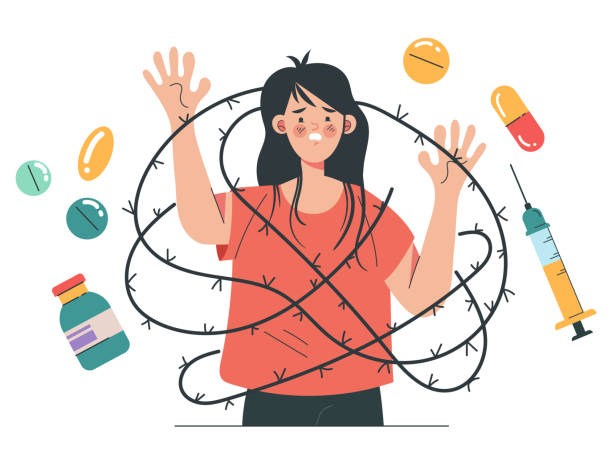
In some cases, drugs are injected. When the same needles are used by multiple people, viruses like HIV or hepatitis can be transmitted easily through blood. But the risk doesn't only come from injection. Drugs affect the ability to make decisions. People under the influence may have unprotected sex or engage in risky behaviors without thinking of the consequences. Many young people later say the same thing: "I didn't think about it at that moment."
A Reality Seldom Spoken Of
Another worrying phenomenon is that teenagers are sometimes lured into drug distribution networks. Authorities in Moldova have warned that minors are sometimes used as distributors or couriers, including through online platforms. Traffickers take advantage of the fact that minors do not have full criminal responsibility and can be more easily influenced. For a teenager, it might seem like an adventure or a quick way to make money. In reality, it is one of the fastest paths to serious legal and health problems.
Denis's Story
Denis was 17 and in the 11th grade. He and Vlad were the kind of friends who grow up together without realizing it. They studied for the same tests, skipped classes together for a juice in town, and sent each other memes at 2:00 AM. That’s why Denis was the first to notice something was wrong.
At first, it seemed trivial. Vlad said he was tired. Then he started missing school more often. Teachers marked him absent, and he just shrugged. When they went out, conversations didn't flow the same way. Vlad became irritable over nothing or seemed absent. Sometimes he disappeared completely, not responding to messages for days.
Denis felt something was wrong but said nothing for a while, fearing Vlad's reaction. Then, late one night, Denis's phone vibrated. A message from Vlad: "I can't anymore. It's all too much." It wasn't a long message, but Denis understood his friend needed more than just a conversation.
The next day, Denis did something many teenagers avoid: he talked to an adult. He went to the school counselor and later spoke with Vlad's mother. It wasn't easy; he felt like he was betraying his friend. The situation didn't resolve overnight, but that discussion was the first step toward the help Vlad needed. Denis realized that being a good friend doesn't always mean keeping secrets; sometimes it means having the courage to do the uncomfortable but right thing.
Why Is It So Hard to Intervene?
There is a silent rule in almost every group of teenagers: friends don't snitch on each other. People fear being seen as a "traitor." But psychologists say loyalty doesn't mean silence. Silence can make things harder for the person struggling. Asking for help isn't giving up on a friend; it's the opposite—it means you care enough not to let things get worse.
Andrei's Story
Andrei was 18 when he went to university. For the first time, he had total freedom. In an effort to fit in at a party, he accepted a pill someone offered to help him "relax." He didn't think much of it, but over the following months, such nights became more frequent.
One day, during a routine medical check-up at the university, Andrei was shocked to find he had a sexually transmitted infection. He realized he hadn't truly thought of the consequences in those moments when substances affected his judgment. His story is not rare; drugs significantly increase the risk of HIV and STIs because they impair the ability to make safe choices.
What Does Prevention Really Mean?
Prevention isn't about fear; it's about having the right information to make conscious choices. It means:
Refusing unknown substances.
Informing yourself about risks.
Talking to an adult or specialist.
Taking care of your physical and emotional health.
Where Can Teenagers in Moldova Seek Help?
A place where you can come exactly as you are: The "Renașterea" Social Center in Chișinău.
For many young people, the first visit starts out of curiosity or a need for support regarding health, relationships, or drug use. At "Renașterea," teenagers can talk to psychologists and specialists who offer real support, not moralizing lectures.
They offer free and confidential HIV testing in a safe environment. It’s also a community space for educational projects and open discussions.
Address: Chișinău, 20M Melestiu St.
Phone: +373 68 40 44 40
Other Free and Confidential Services:
Neovita Youth-Friendly Health Centers.
A Question for Every Teenager
If you met yourself ten years from now, what would they say to you? Your future self would probably tell you one simple thing: Don't forget about yourself. Don't let a momentary curiosity or peer pressure decide your path. Every choice, no matter how small, is part of the journey toward the person you will become.


Schedule a free consultation